Kilimanjaro, Tanzania
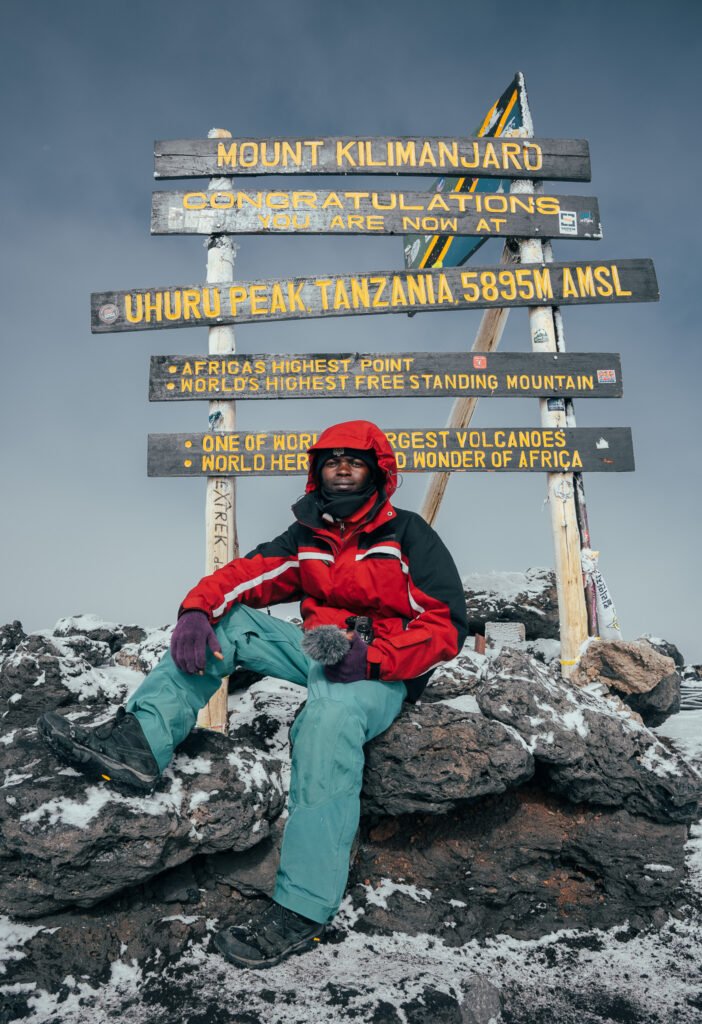
5,895m — Uhuru Peak

What Kilimanjaro Taught Me

Six lessons on filming at altitude — the gear failures, the permits, the porters, and the mornings that made every frozen finger worth it.

The first thing Kilimanjaro takes from a filmmaker isn’t the shot. It’s the certainty. You plan for six days of climbing and shooting, and by day two the mountain has already rewritten your call sheet — your batteries are dying faster than the spec sheet promised, your gimbal is fighting you in the cold, and the light you built your whole schedule around has vanished behind cloud that wasn’t in the forecast.

I’ve now shot two documentary projects on the mountain, most recently A Call From Kilimanjaro, and both times I came down with more respect for the crews who’ve done this before me than I had going up. Kilimanjaro isn’t a difficult mountain to climb by technical standards — no ropes, no ice axes — but it is one of the more unforgiving places I’ve pointed a camera. The altitude doesn’t care about your shot list.

What follows isn’t a packing guide. It’s what actually changed how I work, on this mountain and every shoot since.
CAM B — SUMMIT NIGHT
Watch: Behind the Climb — 03:41
Lesson 01

Cold kills batteries before it kills you

Every battery I own performs beautifully at sea level and turns into dead weight above 4,000 metres. Lithium-ion cells lose charge fast in the cold, and by summit night — sub-zero, wind-chilled — a fully charged battery can drop to nothing in under an hour. Now I carry double the batteries I think I’ll need, keep the spares in an inner jacket pocket against my body heat, and never let one sit exposed in a bag longer than the shot requires. Hand warmers taped to a battery pouch bought me an extra thirty minutes of runtime on summit night — the difference between capturing the sunrise or not.

Lesson 02

The mountain has more paperwork than the plan does

Professional filming inside Kilimanjaro National Park requires clearance from Tanzania National Parks and the Tanzania Film Board before a single frame is shot, and drone work adds the Civil Aviation Authority and, for foreign operators, the Ministry of Defence on top of that. Approvals can take weeks, and filming fees are charged per day. I now start the permit process the same week I confirm the shoot dates — not after. Nothing wastes a mountain crew faster than standing at the gate with a camera and no paper to show for it.

Lesson 03

Every extra kilogram is a favour you’re asking someone else to carry

There’s no vehicle above base camp. Everything you bring gets carried — by you, or by a porter working under a strict weight limit. I used to pack for every possible shot; now I pack for the film I’ve actually decided to make. One body, two lenses, a compact gimbal, and just enough drone to get the aerials that matter — everything else stays at the lodge. Lighter gear also survives the cold and the dust better than anything bulky ever has.

Nelson Godfrey on a Mount Kilimanjaro expedition
Lesson 04

Acclimatize the crew, not just the talent

It’s easy to build a shoot schedule around the climbers and forget that altitude sickness doesn’t check your call sheet. A camera operator with a pounding headache at 4,600 metres makes worse decisions and slower ones. I now build rest days into the shoot plan, not just the climb plan, and I brief the whole crew on symptoms before we leave the gate. A missed shot is recoverable. A crew member who pushed through altitude sickness to get it usually isn’t worth what it cost them.

Lesson 05

The best light shows up when you’re not ready — so be ready anyway

Fog on Kilimanjaro can cut visibility to fifteen metres one hour and clear to a horizon of stars the next. The pattern I noticed across both climbs: the sky tends to open up right around dusk and again just before dawn, briefly, whether or not your schedule has you awake for it. I now leave a camera running on a timelapse rig at every camp overnight, rain cover on, battery swapped for the coldest hours. Some of the strongest footage from both films came from a camera nobody was actively operating.

Lesson 06

You’re a guest on the mountain, and the film should say so

Guides and porters aren’t background for the shot — most of them know the mountain better than any of us with a camera ever will, and many have their own stories worth telling on camera. I make a point of asking before I film someone working, sharing footage back with the crew who appear in it, and following the same Leave No Trace standards the park asks of every climber. The films that hold up are the ones that treated the mountain, and the people who work it, as collaborators rather than scenery.

“The mountain doesn’t slow down for your shot list. You either build a workflow that survives it, or you come home with a memory card full of what you missed.”

— Field notes, Machame Route
Sunrise — Barafu Camp, 4,673m
Machame Route — moorland zone
Summit push — Uhuru Peak, 5,895m

None of this makes Kilimanjaro an easy shoot. It just makes it a survivable one — and a shootable one, which matters more once you’re standing at Barafu Camp at 2am wondering if the battery in your pocket has enough charge left for sunrise. Every filmmaker who works in remote or high-altitude places eventually learns some version of these six lessons. I’d rather you learn them here than the way I did.

If you’re planning a shoot on Kilimanjaro, or anywhere altitude and weather are working against you, I’m always happy to compare notes.

NG
Nelson Godfrey
Filmmaker / Cinematographer / Editor